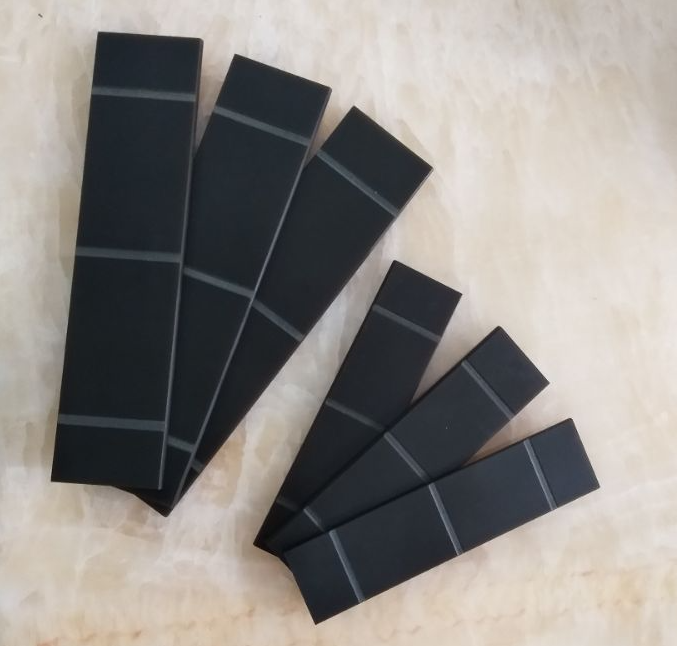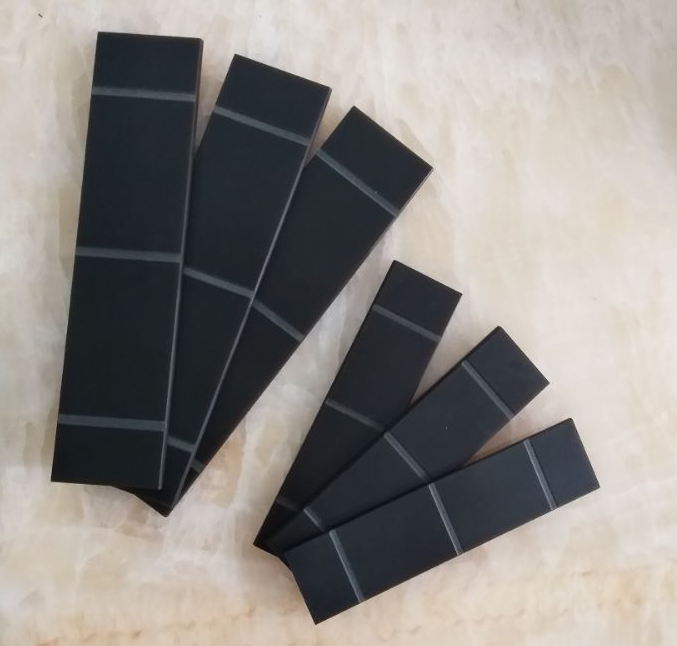
Vacuum pump blades, also known as vacuum pump rotor blades, are installed inside rotary vane vacuum pumps and are one of the accessories for obtaining vacuum source during vacuum pumping. During the non operation of the vacuum pump rotor in the pump body, friction will occur, which can easily lead to wear, fracture, expansion, and other phenomena of the vacuum pump blades without lubrication from the vacuum pump oil. As a result, the vacuum degree is insufficient and the vacuum cannot be lifted.
Vacuum pump blades are commonly used in the rotor slots of rotary vane vacuum pumps. The vacuum pump rotor and blades are sealed inside the vacuum pump cylinder body, and vacuum pump oil is used as a lubricating medium to increase the contact area between the vacuum pump blades and the cylinder body, thereby achieving ideal extreme vacuum.
There are various common materials for vacuum pump blades on the market, including graphite carbon sheets (carbon precision sheets), resin blades, glass fiber, carbon fiber, aluminum alloy, and other materials.
Inpowervac material of vacuum pump blades has high bending strength and is not easily deformed or bent during oil disturbance start-up and operation under high inlet pressure; The density is smaller than that of iron, so the centrifugal force is smaller, the wear on the cylinder wall is smaller, and it will not directly bite into the metal; Capable of withstanding high temperatures; The thermal expansion coefficient in the length direction is relatively small, comparable to that of cast iron, so the tolerance in this direction can be considered according to the cast iron part during design. The expansion coefficient in the thickness direction is larger, the hardness is higher, and the oil lubrication friction coefficient is smaller. With sufficient oil lubrication, it is wear-resistant and durable.